Evidence & Impact

Reported results from real classrooms. Hear how teachers say that Koloso is transforming their teaching experience.

320+
Schools Using Koloso
750+
Teachers Supported
6,500+
Learners Benefiting
85%
of non-teaching task time saved

Evidential Foundations

Download our research and methodology documents

Koloso Theory of Change

Download our comprehensive Theory of Change document to understand how Koloso creates lasting impact in education.

Download PDF

Koloso Pedagogical Rationale

Explore the educational principles and research that underpin the Koloso teaching methodology.

Download PDF

Evidence & Impact Series

Our research publications and programme documentation

2026 Programme

Koloso's planned research and evidence-building activities for 2026, with transparent status tracking as activities are completed. Sets out what we intend to do, when, and what we expect it to tell us — alongside an honest account of what we do not yet know. Updated as new publications are added.

Download PDF

Working Paper 1

Assessment at Scale On 6 March 2026, Koloso hosted the Mini CEO Round 2 competition involving 109 schools across Zambia, producing a near-normal distribution of school scores. This working paper examines what that result does and does not tell us about Koloso's assessment methodology, and proposes a correlation study with Zambia's forthcoming UNICEF/FCDO national learning assessment as the logical next step.

Download PDF

Working Paper 2

Continuous Curriculum-Aligned Digital Assessment Provides the theoretical foundations for Koloso's assessment design, drawing on research evidence for formative assessment, retrieval practice, spaced learning, and low-stakes testing. Sets out six research questions and a four-stage strategy for building the evidence base as Koloso scales. Intended to be read alongside WP/2026/01.

Download PDF

Working Paper 3

How Far Have We Come? Tulna Index 2024 vs 2026 An updated self-assessment of Koloso's product against the Tulna Index — a quality evaluation framework from IIT Bombay — using a 2024 baseline for direct comparison across 36 criteria. Records improvements honestly, acknowledges persistent weaknesses, and reflects Koloso's evolution from a digital assessment game into a full Teaching Support System.

Download PDF

More publications coming soon as our research programme continues.

Policy Notes

Our policy positions and commitments

Policy Note on Responsible AI

Responsible AI in the Classroom Sets out in specific and verifiable terms how Koloso uses AI in its Teaching Support System, describing three design principles: bounded scope, teacher-gated outputs, and zero-retention anonymised data architecture. Responds directly to the questions school leaders and parents should be asking of any edtech product that carries the AI label, and proposes these principles as a minimum standard for the sector.

Download PDF

Our Commitment to Evidence

At Koloso, we believe that effective education technology must be grounded in rigorous evidence. We are committed to understanding what works, what doesn't, and why.

Our approach combines ongoing data collection from partner schools, independent research partnerships, and transparent reporting of our findings. We don't just measure outputs — we measure real learning outcomes and teacher experiences.

This commitment drives continuous improvement in our platform and ensures that every feature we build is designed to create genuine impact in classrooms across Zambia and beyond.
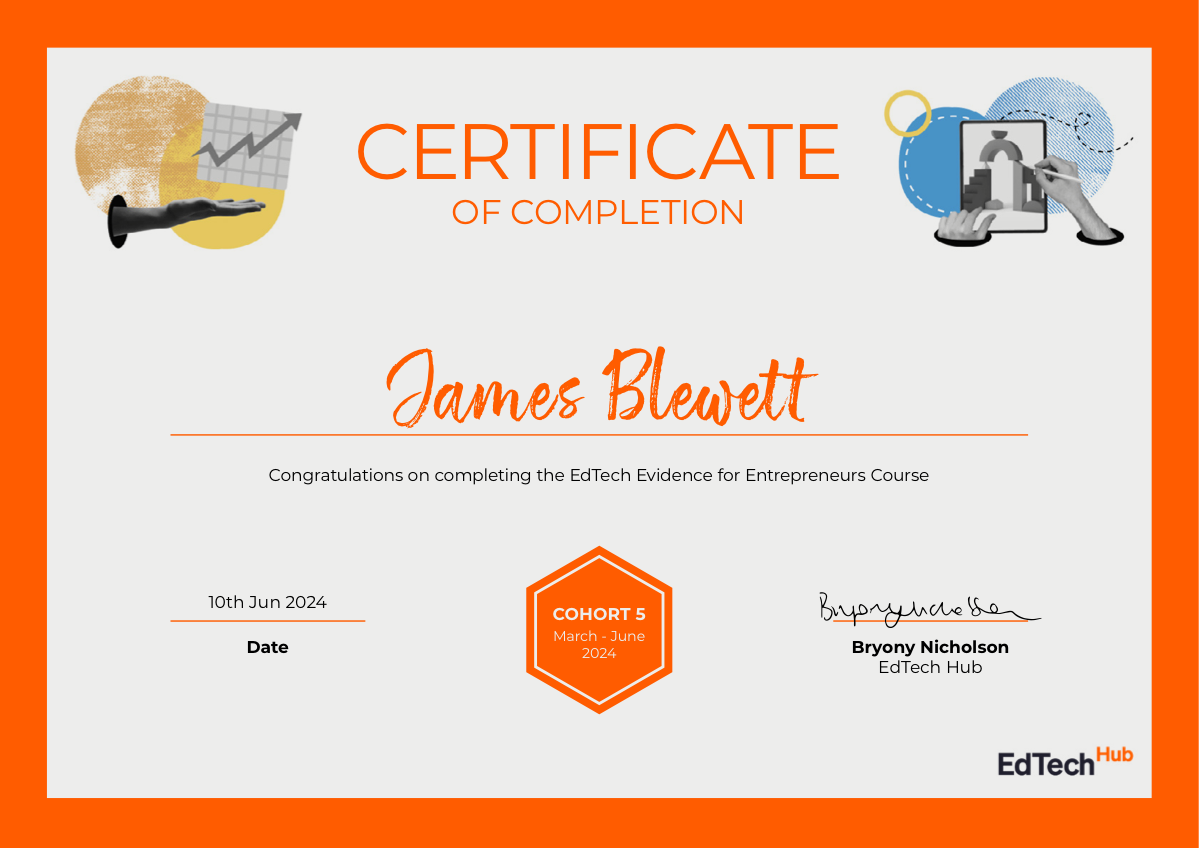
EdTech Hub Certificate

See the Impact for Yourself

Join the schools already transforming education with Koloso.

Get Started for Free